Scan to open on your phonegymvim.app/exercises/dead-hang
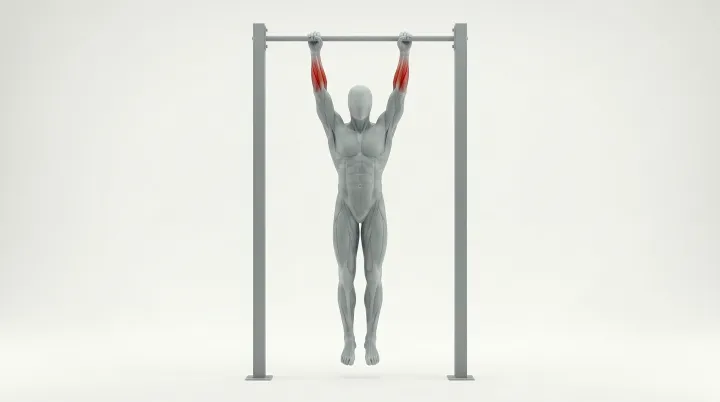 7s · no sound
How to do it
- Set a bench or box under a secure pull-up bar so you can reach it without jumping.
- Take an overhand grip slightly wider than shoulder width with the thumbs wrapped around the bar.
- Step off the support and let your body hang with the arms straight.
- Keep the neck long and let the shoulders relax toward the ears in a passive hang.
- Squeeze the glutes lightly and hold the legs still so the body does not swing.
- Hold for the prescribed time, then step back onto the support before releasing the bar.
Common mistakes
- Jumping to the bar and dropping off it, which loads cold shoulders and wrists at speed.
- Gripping without wrapping the thumb, which ends the hang well before the forearms are trained.
- Holding the arms slightly bent, which fatigues the biceps and hides the grip work.
- Letting the body swing, which spreads the load unevenly across the shoulders.
Muscles worked
- Primary
- Forearms
- Secondary
- AbsFront DeltsUpper Back
Plans that include the Dead Hang
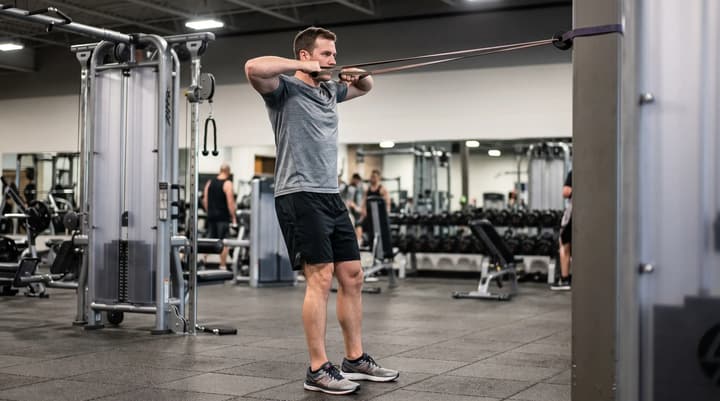
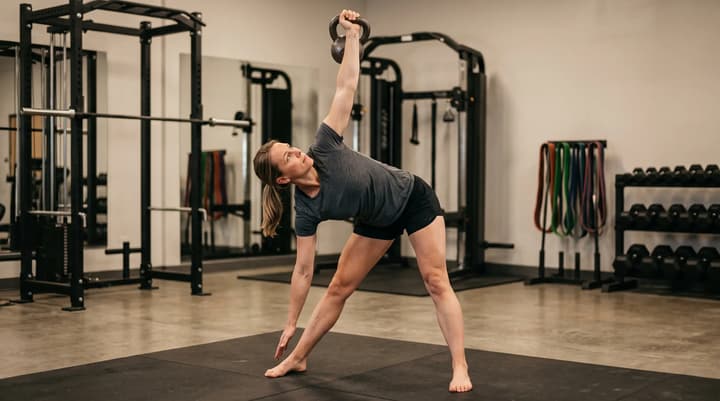
Similar exercises
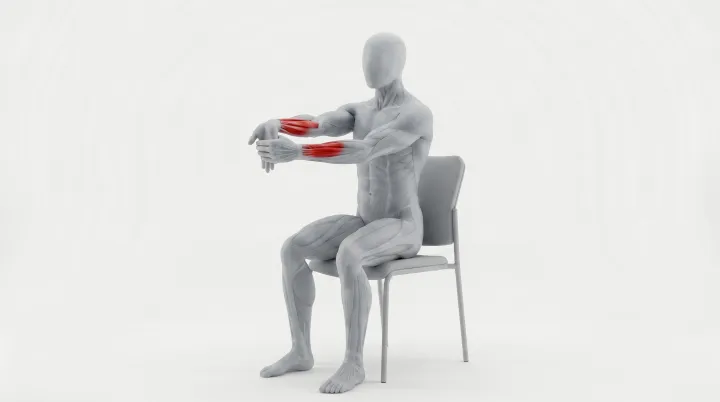
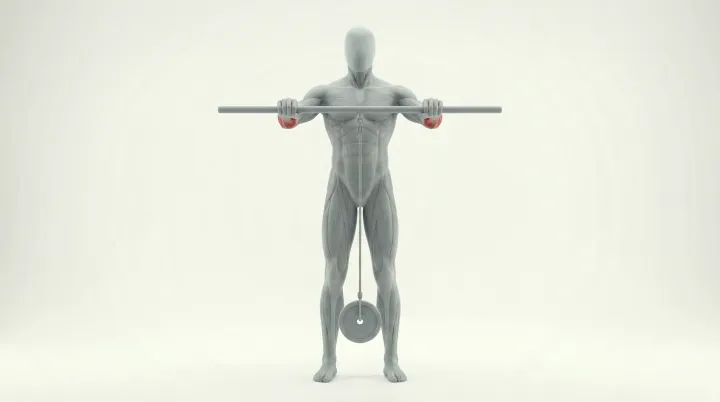
Good to know
- What muscles does the Dead Hang work?
- Mainly the forearms. It also works the abs, front delts and upper back.
- What equipment do you need for the Dead Hang?
- None. It is a bodyweight exercise.
- Is the Dead Hang good for beginners?
- GymVim rates it beginner.